
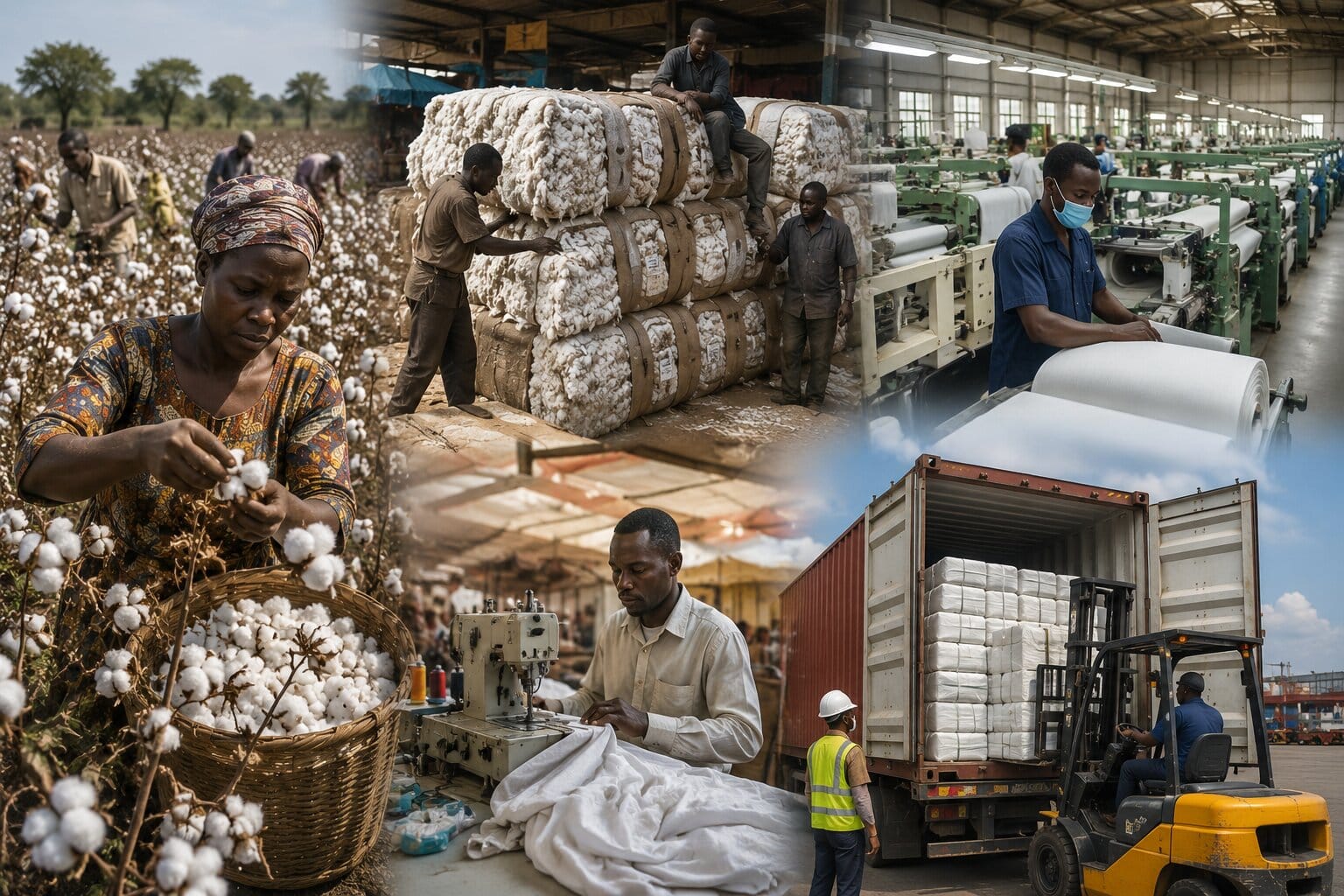
African Cotton Foundation Calls for End to Raw Cotton Exports
A notable industrial transformation is underway across Africa's rural areas and economic zones, spearheaded by the African Cotton Foundation (ACF). Headquartered in Nairobi, Kenya, the ACF, a pan-African organization coordinating the cotton sector, has issued a formal appeal to halt the extensive export of raw cotton. The primary objective is to transition towards local processing and manufacturing, enabling African countries to compete with established Asian textile manufacturers in European markets.
Africa is a major producer of cotton, yielding over 1.2 million tons annually. This crucial agricultural commodity supports numerous rural economies and provides essential income for millions of small-scale farmers. However, the ACF highlights that a substantial portion of this cotton is still exported in its raw form. This practice limits the continent's industrial potential, restricts the creation of skilled jobs, and prevents the retention of added value within African nations. To address this reliance, the ACF is coordinating a continent-wide initiative. Its mission involves safeguarding cotton-growing environments while also enhancing the livelihoods of farming communities. According to ACF experts, processing cotton locally into yarn, fabric, and finished garments is no longer merely a developmental option but an essential step for competitiveness amidst evolving global supply chains.
West African Nations Lead Textile Manufacturing Revival
Evidence of this industrial shift is already emerging. The ACF has observed a significant increase in textile exports to the European Union from modern factories established in West and Central Africa. Pioneering countries such as Benin (notably through the Glo-Djigbé industrial zone), Togo, Cameroon, and Nigeria are emerging as key manufacturing hubs on the continent. As Western buyers seek to diversify their textile supply chains away from Asia, Africa presents a competitive alternative. Garments produced in Africa offer ecological sustainability, competitive costs, and geographical proximity to Europe, thereby reducing the carbon footprint associated with transportation. The ultimate goal is for African cotton to be not only cultivated but also spun, designed, and marketed under competitive African brands.
Regional Integration and Economic Empowerment
The industrialization of Africa's textile sector is viewed as a critical test for regional integration. Gaining access to global markets now requires the establishment of integrated, peer-to-peer value chains. Improved inter-state logistical and road infrastructures are enabling landlocked cotton-producing countries to transport their raw materials to coastal textile hubs in Benin or Togo, fostering an interconnected commercial ecosystem. This initiative is central to empowering women economically and creating employment opportunities for young people. By transforming a raw agricultural resource into a geopolitical asset, Africa aims to redefine its economic relationship with major Western consumer markets.
Investment Potential and Future Outlook
To realize this vision, the ACF is actively connecting governments, agricultural cooperatives, and international investors. The development of an integrated textile sector represents a high-yield investment opportunity, supported by rapidly growing regional markets. The ACF's coordination platform is prepared to forge new public-private partnerships to accelerate technology transfers. The continent is now equipped with the technical and ecological capabilities to establish itself as a global leader in ethical fashion and textile manufacturing by 2030. The ACF's strategy signifies Africa's determination to control the value of its labor and natural resources. By emphasizing the sustainability and proximity of African cotton over the dominance of Asian factories, the continent is laying the groundwork for promising industrial independence. The success of this economic emancipation will largely depend on whether local financial institutions provide the substantial credit lines needed to scale up these next-generation manufacturing facilities.
Source: Le Journal du Congo