
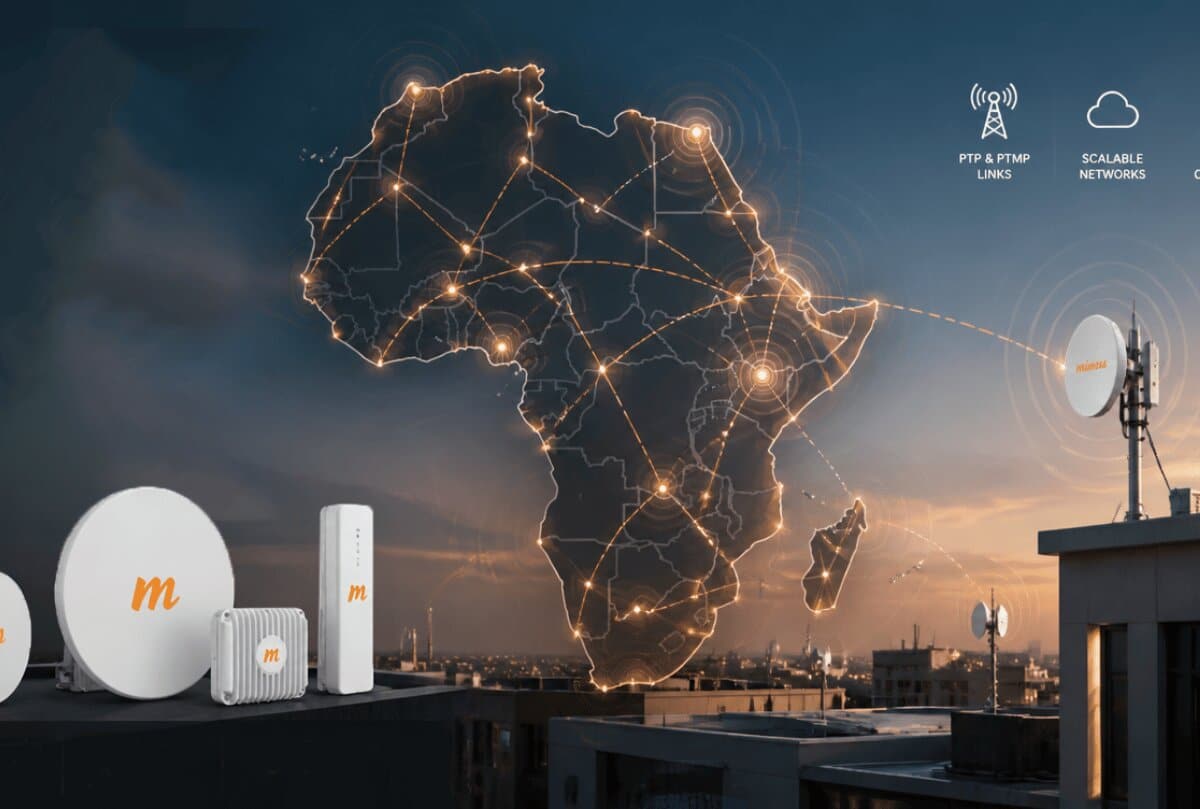
Revolutionizing African Digital Infrastructure with Fixed Wireless
Africa's digital infrastructure is set for a substantial advancement following a strategic distribution partnership between technology integrator NEC XON and American firm Mimosa Networks. This collaboration, formalized in May 2026, focuses on deploying fixed wireless broadband across the continent. The alliance is designed to deliver carrier-grade connectivity, comparable to fiber optics, particularly in areas where the installation of physical cables is either financially unfeasible or logistically challenging.
Wireless as a Solution to Fiber Optic Barriers
The expansion of high-speed internet in Africa often faces significant hurdles due to the high costs and slow pace associated with laying underground fiber optic cables. To overcome these obstacles, the partnership positions NEC XON as a key supplier of Mimosa Networks' advanced technologies. The primary goal is to provide operators, Internet Service Providers (ISPs), and large enterprises with scalable fixed wireless access and backhaul solutions.
Mimosa's product portfolio incorporates sophisticated technical innovations such such as TDMA scheduling, MU-MIMO, and beamforming. By utilizing unlicensed frequency bands (5 GHz and 6 GHz), these systems enable the rapid deployment of high-speed internet networks, often within days, in contrast to the several months typically required for conventional civil engineering projects. According to Wally Beelders, an executive at NEC XON, wireless technology is no longer merely a temporary backup solution but a commercially viable, primary access technology for Africa.
Tangible Benefits for African Citizens
This technological shift is expected to profoundly impact access to essential services for individuals across Africa. High-speed internet installation will no longer depend on extensive roadworks for fiber optic burial. Students in underserved peri-urban or rural areas will gain the ability to participate in online courses, download substantial educational content, and take video conference exams without interruptions. For entrepreneurs and local businesses, this ensures the capability to digitize operations, accept instant mobile payments, and access regional markets, such as those within the AfCFTA, without network slowdowns.
In dense multi-dwelling units and remote villages, access to stable and affordable connectivity will alleviate digital isolation, facilitating everything from remote medical consultations to the growth of connected micro-enterprises.
Extensive Digital Convergence Across Sub-Saharan Africa
The implementation phase is already underway, with initial results emerging in several key regions. NEC XON has begun installing these infrastructures, securing active client contracts in South Africa, Namibia, and Malawi. Concurrently, proof-of-concept projects are in progress in Lesotho and Ethiopia, a market characterized by rapid population growth. The partners have ambitious plans for the coming months, with NEC XON aiming to deploy between 2,000 and 5,000 wireless devices across the continent within a year. Beyond the corporate sector, this technology is intended to connect rural communities, serve dense residential areas, and provide urgent telecommunications restoration in regions affected by environmental or logistical crises.
This agreement between NEC XON and Mimosa Networks redefines the rules of economic patriotism and digital inclusion in Africa. Faced with international pressure to digitize public services and develop online trade via the AfCFTA, operators can no longer wait for fiber optics to connect every village. By converting free frequencies into digital highways, this partnership democratizes access to knowledge and the global financial market for millions of those excluded from the web. It is the indispensable technological leap to stimulate the competitiveness of local businesses, foster telework and connected education without increasing the infrastructure debt of African states.
As Jim Nevelle, CEO of Mimosa, emphasizes, operators in the Middle East and Africa region are under pressure to efficiently broaden broadband access. The adoption of a high-capacity wireless architecture offers a significant price-performance advantage in addressing the deficit of physical infrastructure. The combined technical expertise of NEC XON and Mimosa provides a concrete solution for the continent's digital transformation. By offering reliable, rapidly deployable, and scalable networks, the alliance is paving the way for the widespread adoption of Fourth Industrial Revolution innovations in Africa. The distribution partnership between NEC XON and Mimosa Networks signifies the advent of pragmatic and sovereign connectivity, free from the complexities of traditional physical deployments. By embracing industrial-grade wireless technology to expand connectivity in Sub-Saharan Africa, these two technology giants demonstrate that the continent's digital leap will occur wirelessly. The critical next step will be for local governments to adapt regulatory frameworks to safeguard and optimize the use of unlicensed frequencies, as the fluidity of tomorrow's economy will directly depend on the freedom of these airwaves.
Source: Le Journal du Congo